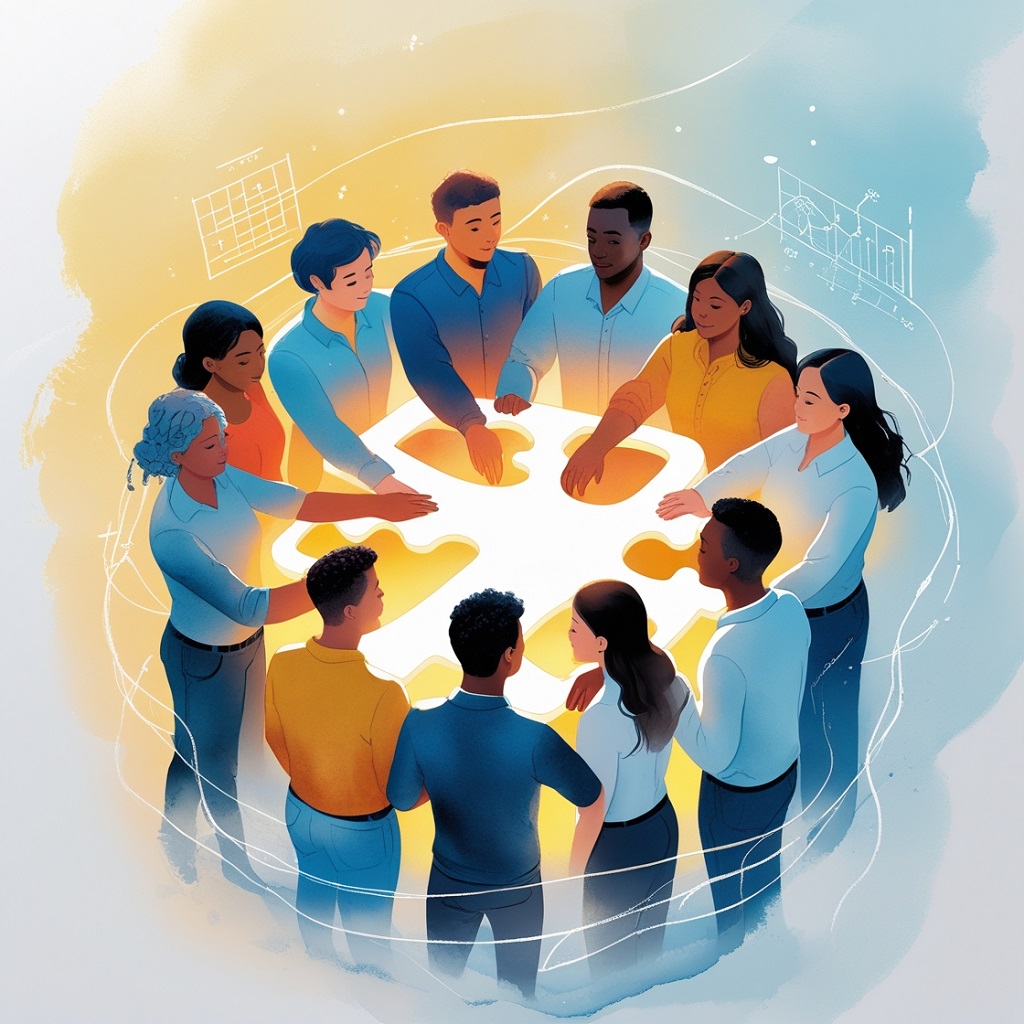
As a university prof running a technical engineering program, I actively seek out companies locally and nationally to understand the kinds of skills they will need from our graduates in the future. It is always hard to predict future skills needs, and the latest trends have a tendency to overshadow considering what the real, enduring skills needs are (I am looking at you big data, analytics, metaverse, blockchain, AI …). But, a topic that consistenly comes up in conversations about graduate skills is teamwork.
This makes sense. The vast majority of companies and organisations are project-driven to a greater or lesser degree, and any business needs folks with the ability to collaborate, communicate and innovate. Teamwork transgresses our professional lives and is relevant for everyone, including children, who have to navigate school, friendships and the challenges of growing up.
In approaching building teamwork skills with my students, I heavily rely on storytelling. Stories are a powerful medium to utilize when explaining what teamwork-related skills are, and how to utilize them effectively. If I can make those stories interactive, for example by including decision and discussion points, the learning outcome is enhanced. This is one of the reasons I employ plentiful role-playing exercises combined with case studies in educational situations.
When writing Antwork, I considered how to integrate key lessons about what makes teams work in the personalities, relationship and strategies employed by the dynamic duo of Wimax and Leodie. I wanted to build an inspiring example of how teamwork and a healthy dose of creativity and innovative spirit can overcome the toughest obstacles.
While the main audience of Antwork is children, the lessons are the same I try to important on my university students, and use in my daily life as a research leader.
Much has been written about teamwork in management literature and elsewhere, and none of the points about teamwork made in Antwork are particularly novel. That does not make them any less valuable to be reminded about and to reflect on.
I would highlight five key lessons from the story which resonates with much of the teamwork literature aimed at professionals:
1. Recognizing and Leveraging Strengths
Antwork is set in a futuristic, steampunk-y hive city. It is intended as an educational journey into the interplay between economics, technology and society – powered by storytelling. But at its heart, the story is about two young siblings and their friends, whose combined strengths make them a force to be reckoned with.
Wimax and Leodie are as different as night and day. Wimax is the thinker — analytical, cautious, and detail-oriented, with a deep need for the world to be logical and make sense. She is moulded around one version of Aspergers syndrome (which is highly varied in its expression), that I have some personal experience with. Leodie, on the other hand, is bold, creative, and unafraid to take risks. She needs change to function, and constantly pushes boundaries with enormous energy.
Alone, their approaches might lead to frustration or failure. Together, they balance each other out, creating a partnership where each can thrive. It is not alway unproblematic. They have their fights, but they both understand that together they are capable of more than they can alone.
Great teams are made up of individuals with diverse strengths. We know this from our professional lives, and teaching our students that same lesson is important. Teach students to recognize their own abilities and appreciate what others bring to the table. Collaboration is not about competition — it is about complementing one another.
2. Trust and Communication Are Key
The duo’s adventures often put them in precarious situations, from climbing precarious shelves for syrup jars to navigating the hive’s political intrigue. They succeed because they trust each other implicitly and communicate openly, whether sharing ideas or warning each other of danger.
Trust and clear communication are the bedrocks of good teamwork. I keep repeating this point to my project management students, because it really is the basis upon which high-performing teams are built. For students, encourage them to practice listening, expressing their ideas, and resolving conflicts constructively. We may believe they have learned this in secondary schools, but especially the post-Covid years can struggle with this. Understanding trust and open communication sets them on a path to being excellent communicators.
3. Innovation Is a Team Endeavour
One of the central themes of Antwork is the invention of a new currency that challenges the status quo. This idea emerges not from individual genius, but from the combined efforts of Wimax, Leodie and their friends. They all look at the problem differently, but jointly, their curiosity, experimentation, and shared determination fuel their success.
Innovation often happens at the intersection of different perspectives. We should encourage our students to collaborate on creative projects, brainstorm solutions together, and see failure as a stepping stone to discovery. That last one is important, and should be combined with a supporting environment that also sees failure as an opportunity to learn.
4. Adapting to Challenges Together
Wimax and Leodie face constant challenges, from figuring out what money is to biomechanical guardians chasing them, all the way over to the powerful Queen’s Court trying to suppress their ideas. They adapt by brainstorming together, dividing tasks, and supporting one another through setbacks. They are highly resilient as a result of their support and the support of their friends and family, their social structure and ecosystem.
Resilience is stronger when shared. We should help our students realize that teamwork is not just about achieving goals (or getting a good grade) – it is also about lifting each other up during tough times.
5. Celebrating Shared Success
When Wimax and Leodie achieve a breakthrough, their joy is amplified by the fact that they share it, not just with one another, but with everyone who contributed. Whether it is a small victory or a significant achievement, they celebrate as a team.
Collaboration really makes success sweeter. Encouraging students to celebrate not only their own accomplishments but also the efforts and achievements of their peers, or results they accomplish together, will help them build joint success stories during their university years that will last a lifetime.
Teamwork as a mindset
Wimax and Leodie’s journey is a reminder that teamwork and innovation are not just skills, but a mindset. Teamwork requires openness, curiosity, and a willingness to grow alongside others. By teaching these lessons to our staff, students and children, we help them build the foundation for a lifetime of collaboration and creativity. Specifically for educational situations, it is important to be aware that all courses should have teamwork, innovation and communication baked into them.
These are crucial skills for the future, and ensuring the next generations have them will help society solve the rather significant problems facing our world.
Antwork tries to show that we can accomplish the impossible when we work together. It is not a novel idea for a book to have, but it is one that will always be important.
Thanks for reading.
My thoughts on games, data and society at www.andersdrachen.com
Books:
Antwork – Two insatiably curious and inventive young girls must develop a new currency to break the power of the all-powerful elite that rules their society. Five stars on Amazon.
Game Data Science: A thorough introduction to the use of data in game design & development, and serves as a definitive guide to the methods and practices of computer science, analytics, and data science as applied to video games. Five stars on Amazon.
Games User Research: A community-driven go-to resource for anyone interested in user experience and user research in games. Five stars on Amazon.
 Game Analytics Resources